Visas and entry for studying in Japan

Check the entry and permit rules and the working holiday conditions, with official sourc⁠e⁠s⁠.

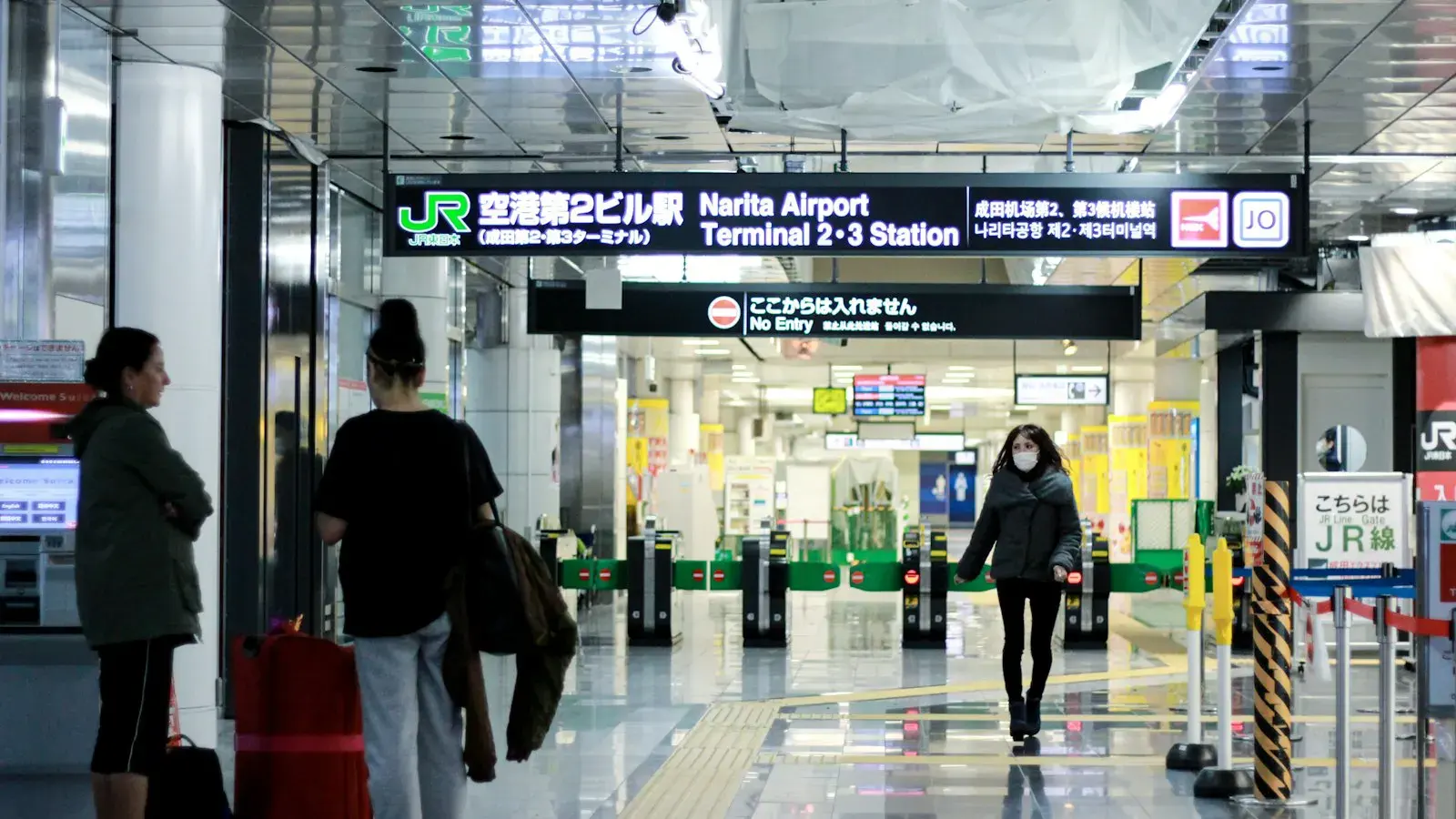
Travellers walking through an airport concourse

Entry and permits for Ja⁠p⁠a⁠n

Entry and permits
  • A1or higher

    Japanese level checked at admission (Japanese Language Education Reference Framework)

  • 2years

    Usual maximum time you can stay enrolled at a Japanese-⁠language school

  • 51months at most

    Upper limit of the “Student” period of stay (4 years 3 months, set case by case)

  • 14days

    To report your address at the municipal office, counted from the day you settle on one

Foreign nationals who attend a Japanese-⁠language school in Japan enter on the “Student” status of residen⁠c⁠e⁠.

The common flow is: choose a school, the school applies for a Certificate of Eligibility (COE), you apply for a visa, then you enter Jap⁠a⁠n⁠.

Required documents differ by school and by nationality or region, so ask the school you want to jo⁠i⁠n⁠.

For COE applications for people due to enter in October 2026 or later, a test certificate or an interview is required to confirm Japanese abili⁠t⁠y⁠.

Source: Immigration Services Agency of Japan: status of residence “Student”Immigration Services Agency of Japan: for those considering entering a Japanese-⁠language institutionImmigration Services Agency of Japan: partial revision of the handling for people entering Japanese-⁠language institutions

Working holiday
  • 32countries and regions

    Partner countries and regions for the Working Holiday scheme (as of 1 April 2026)

  • 18〜30years old

    Eligible age. For Australia, Canada, Korea and Ireland it is 18 to 25 (up to 30 if their governments approve)

Source: Ministry of Foreign Affairs of Japan: Working Holiday scheme (as of 1 April 2026)

Get advice on studying in Japan

Tell us your budget and goals, and our team will suggest options for fr⁠e⁠e⁠.

Get free advice

Frequently Asked Questions

Can I come to Japan without a vi⁠s⁠a⁠?
It depends on your nationality. The Ministry of Foreign Affairs’ list of short-⁠stay visa exemptions (1 September 2025) names 74 countries and regions, with 15 days for Indonesia and Thailand, 30 days for Brunei and Qatar, and 90 days for the rest. The UK, Ireland, Germany, Mexico and some others have a 6-⁠month arrangement, but staying beyond 90 days needs an extension of the period of stay from the immigration agency. For nationalities not in the table above, check the Ministry’s li⁠s⁠t⁠.
Can I use the working holiday sche⁠m⁠e⁠?
Japan’s working holiday scheme is for young people from the 32 countries and regions on the Ministry of Foreign Affairs’ list (as of 1 April 2026). The age range is 18 to 30, and for Australia, Canada, Korea and Ireland it is 18 to 25 (up to 30 if their governments approve). Nationals of Canada and the UK can take part in Japan twice in a lifetime or in two consecutive years; nationals of New Zealand, Germany, Ireland and Korea, and people from Taiwan, can take part twice in a lifetime. The US, Mexico, Colombia and the Philippines are not on the list. For inquiries, contact the Japanese embassy or consulate general in your country or regi⁠o⁠n⁠.
Are there rules on Japanese level and intake dates for a Japanese-⁠language scho⁠o⁠l⁠?
For admission, a level of A1 or higher on the Japanese Language Education Reference Framework is confirmed by a test or an interview. Examples of tests are JFT-⁠Basic A1 or above and JLPT N5 or above. For Certificate of Eligibility applications of people due to enter in October 2026 or later, the 150 hours of study history that used to be accepted is no longer enough; a test certificate or an interview is required. Intakes are usually twice a year (in principle April and October) or four times a year (in principle January, April, July and October). If you plan to go on to a university or vocational school after the language school, a Japanese level of B2 or higher is required. Enrolment is usually 2 years at mo⁠s⁠t⁠.
What do I do first after arriving in Jap⁠a⁠n⁠?
Within 14 days of settling on an address, report it at the municipal office where you live. Take your residence card (or a passport stating that the card will be issued later). There is no fee. For National Health Insurance, people who have an address in Japan and are not covered by another medical insurance become insured persons. You also sign up within 14 days at the National Health Insurance counter of your city, town or villa⁠g⁠e⁠.